Fabric is not just the surface of a garment. It is one of the decisions that determines how a design moves, feels, fits and lasts.
A sketch can suggest a silhouette, but the textile gives that silhouette its physical character. The same pattern cut in crisp cotton, fluid viscose or textured wool can produce three very different results. Choosing fabric with intention means looking beyond colour and print to understand how a material behaves.
Begin with the purpose of the garment
Think about when and how the garment will be worn. A summer shirt needs breathability and comfort. A structured jacket needs enough body to hold its shape. A dress intended for movement may benefit from fluid drape, while a workwear-inspired piece may need a more durable weave.
Purpose narrows the options before a designer considers the visual mood. It also helps prevent a common mistake: choosing a beautiful textile that cannot support the design or the wearer’s needs.
Understand weight and drape
Weight affects warmth, opacity and the way fabric hangs. Lightweight materials often feel airy and move easily, but may require lining or careful seam treatment. Medium-weight fabrics are versatile for shirts, trousers and dresses. Heavier textiles can create strong shapes and structure, though they may need more support in construction.
Drape describes how fabric falls under its own weight. Hold a sample at one corner and observe the folds. Does it create soft, fluid curves or retain a crisp line? Neither behaviour is automatically better. The important question is whether it supports the intended silhouette.
Texture changes the visual language
Texture can add depth without relying on a bold print. Linen has an irregular, relaxed surface; twill introduces a subtle diagonal structure; satin reflects light; brushed wool feels soft and warm. Small differences become especially visible in neutral colours, where the surface itself carries much of the visual interest.
Check the practical qualities
Before committing to a fabric, consider shrinkage, colourfastness, stretch, recovery, transparency and care requirements. A sample should be washed or tested in the way the finished garment is expected to be maintained. Check whether the fabric twists, frays easily or loses its shape after handling.
Let the textile guide the construction
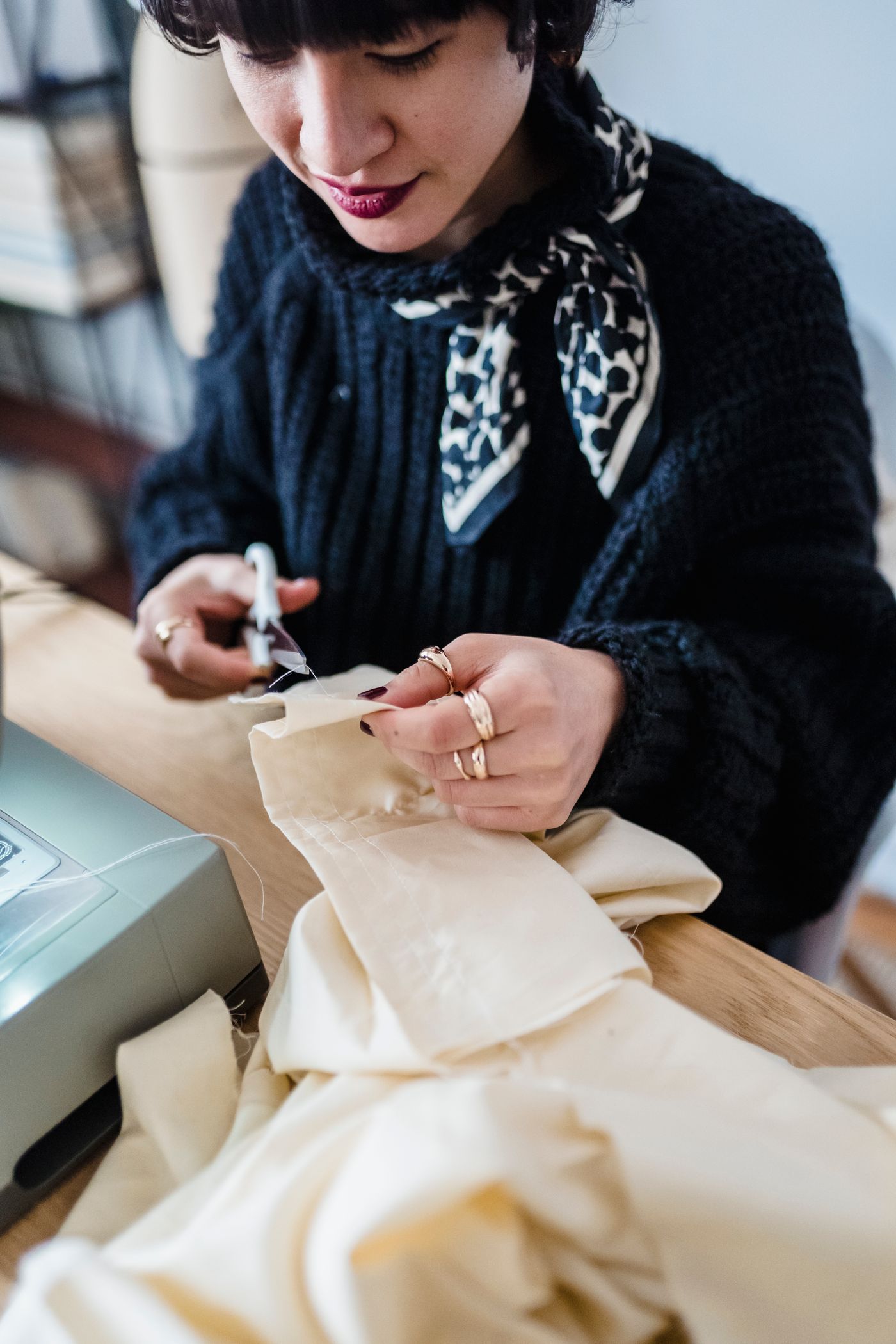
Fabric and construction should be considered together. Slippery textiles may need extra stabilisation during cutting. Open weaves can require a different seam finish from tightly woven cloth. Stretch materials need compatible stitches and an appropriate amount of ease. Matching the technique to the textile helps the garment remain comfortable and durable.
Choosing fabric thoughtfully is a form of design thinking. It connects appearance with function and gives a garment the qualities that cannot be added at the last minute. The best choice is the one that allows the idea to become its most convincing, wearable self.
Good design lives in the details. Keep looking closer with Sewloria.