
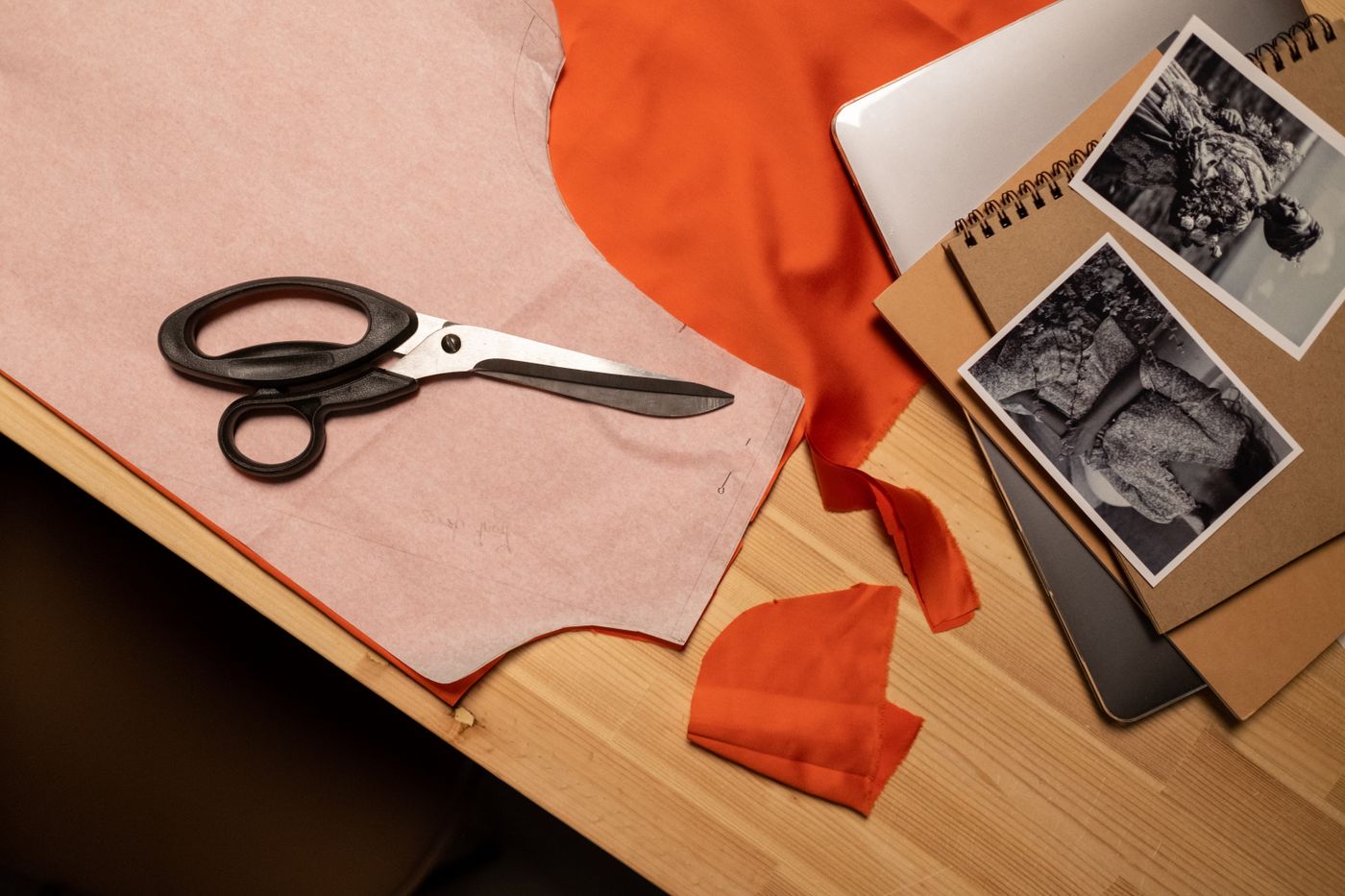
A garment pattern is the practical bridge between a design idea and a finished piece of clothing. It turns a drawing into a set of shapes that can be cut, assembled and fitted to the body.
Pattern making combines geometry, observation and problem-solving. It requires an understanding of the body, fabric behaviour, construction methods and the intended fit. A small adjustment in one area can affect several other parts of the garment.
Start with measurements and a base
Many patterns begin with a block or sloper: a basic shape developed from a set of body measurements. The block provides a reliable starting point for developing different styles. It is not a finished design; it is a foundation that can be adjusted through darts, seams, gathers, panels and changes in ease.
Accurate measurements matter, but they are not the whole story. Designers also consider posture, movement, intended layering and the amount of ease required for comfort. A close-fitting top and a relaxed jacket need different relationships to the body.
Translate the sketch into pattern pieces
Once the design direction is clear, the pattern maker decides where the garment will be divided. A seam can shape the body, create a design line or make construction easier. Darts remove excess fabric to create shape. Pleats and gathers introduce volume. Each pattern piece needs to relate correctly to the pieces that will be sewn beside it.
Mark the information that makes assembly possible
Patterns include more than outlines. Notches show where pieces meet, grainlines indicate how the fabric should be positioned, and labels identify each part. Seam allowances and hem allowances must be added consistently. Clear markings reduce mistakes during cutting and sewing.
Make a toile and test the fit
A toile is a test garment made from an inexpensive fabric with a behaviour similar enough to the final textile to reveal important fit issues. It allows the designer to check balance, volume, length and movement before using the final material.
During fitting, the pattern may be pinned, marked and adjusted. The changes should then be transferred back to the paper or digital pattern so that the next sample reflects what was learned. This cycle of testing and refinement is central to good pattern development.
Respect the fabric
Pattern pieces need to account for grain, stretch, nap, print direction and fabric width. A design that works on paper may need adjustment when cut from a slippery, stretchy or heavily textured textile. Efficient layout can also reduce waste, but it should never compromise the garment’s intended shape.
Good pattern making is both technical and creative. It gives structure to imagination, allowing a designer to explore shape while keeping the garment practical, balanced and wearable.
Good design lives in the details. Keep looking closer with Sewloria.